HPO600
203–603 mm
Connections, distribution networks and medium diameter pipes.
- Tarcza
- 200 mm blade
- Masa
- 13 kg
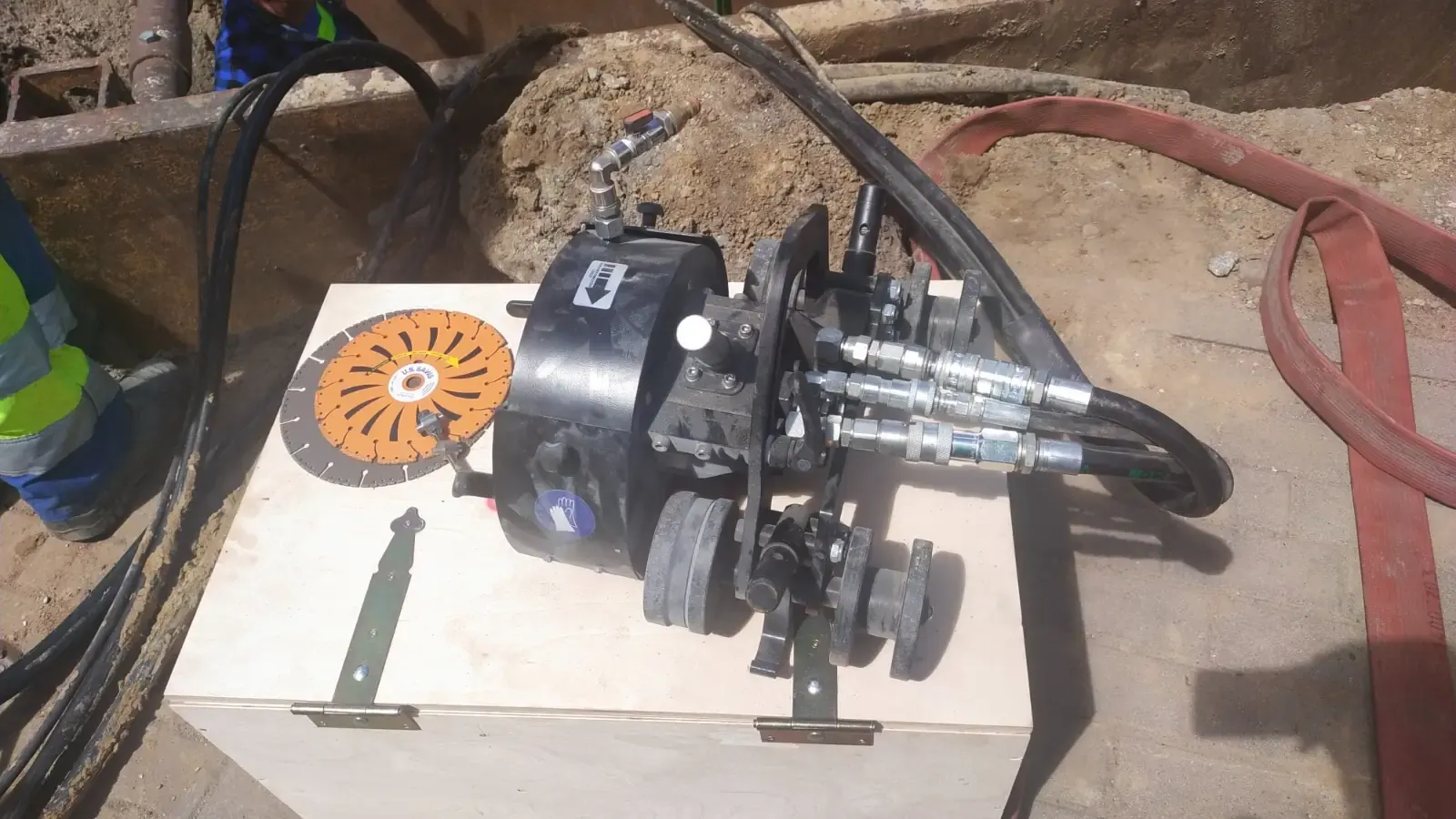
Hydraulic circumferential pipe saw
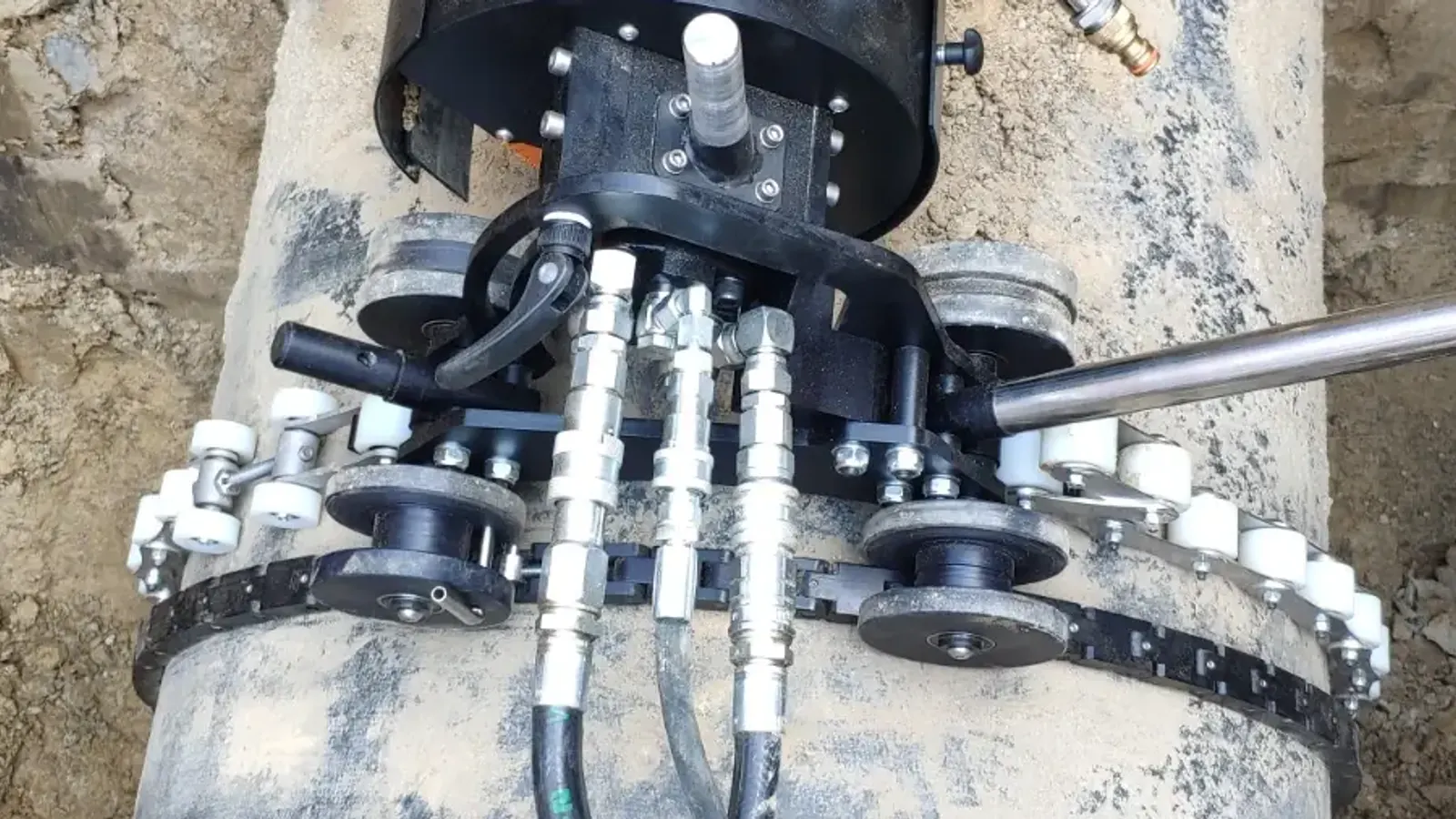
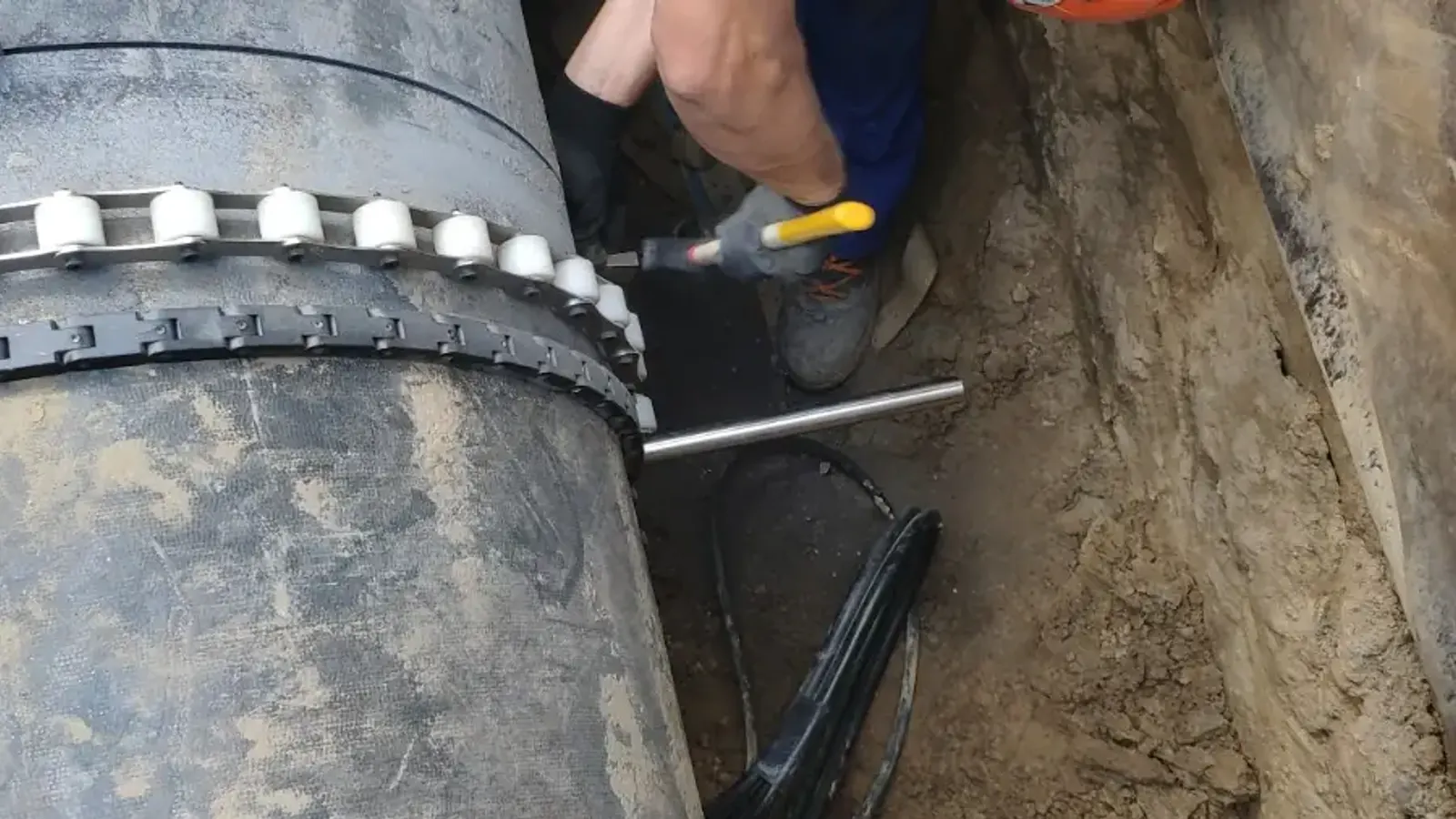
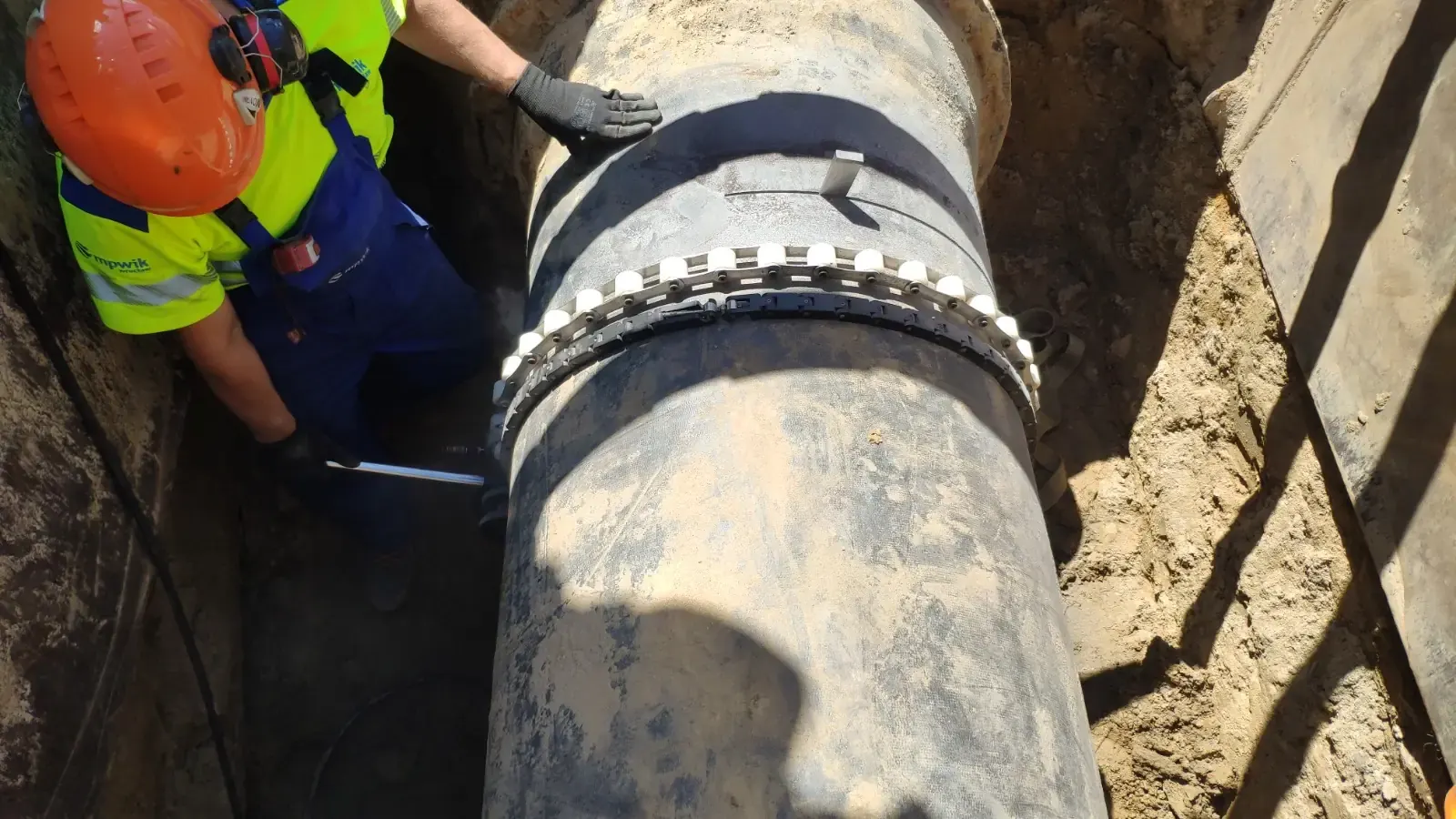
The HydraCut wraps a chain around the pipe and guides the blade all the way round, without lifting the pipe to the surface. It needs 35 cm of clearance, works while flooded with water and cuts Ø800 cast iron in 14 minutes.
203–1200 mm
Pipe diameter range
35 cm
Clearance around the pipe
14 min
Cast iron Ø800
138 bar
Working pressure
13–14 kg
Saw weight
Problem and gain
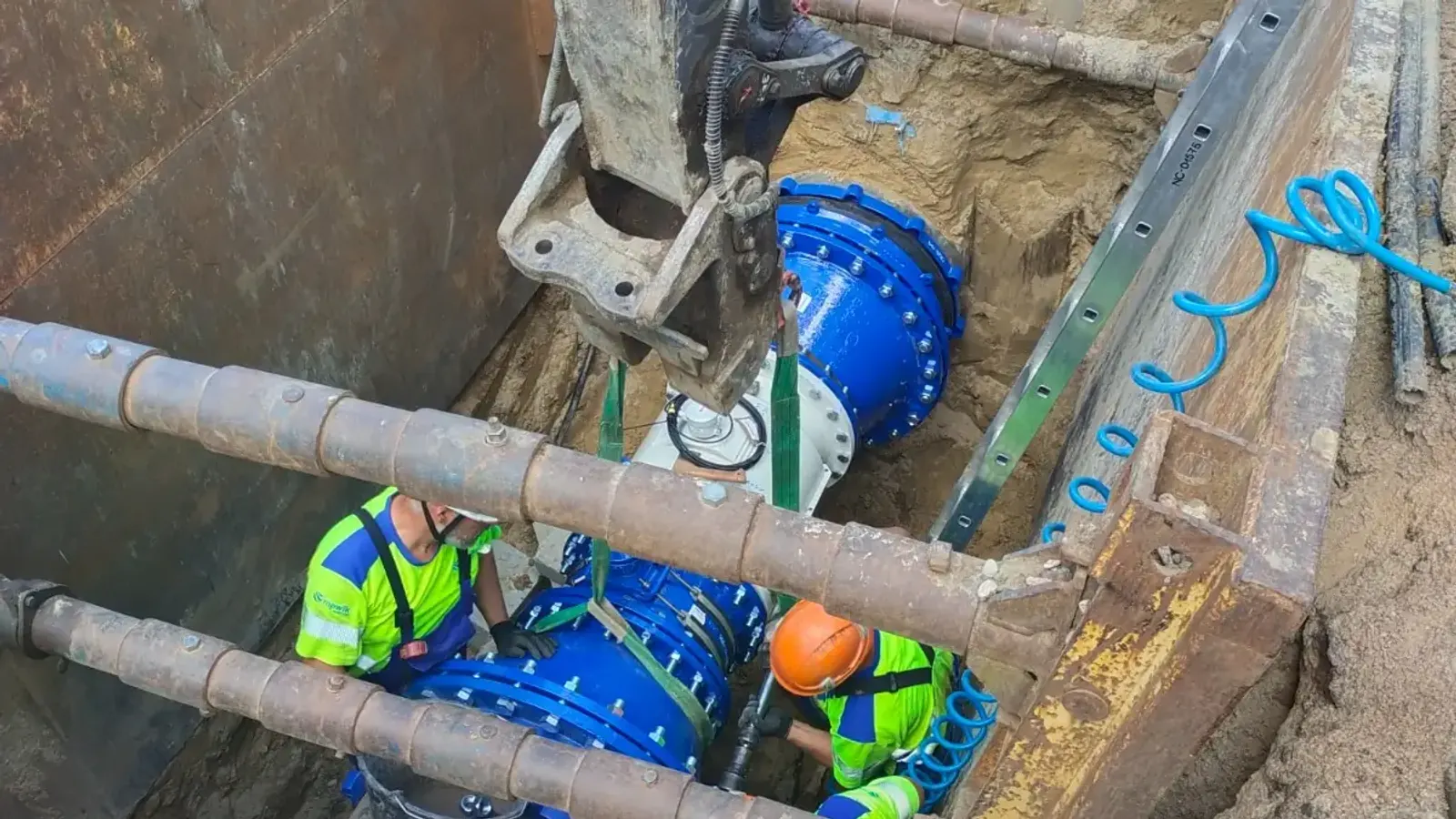
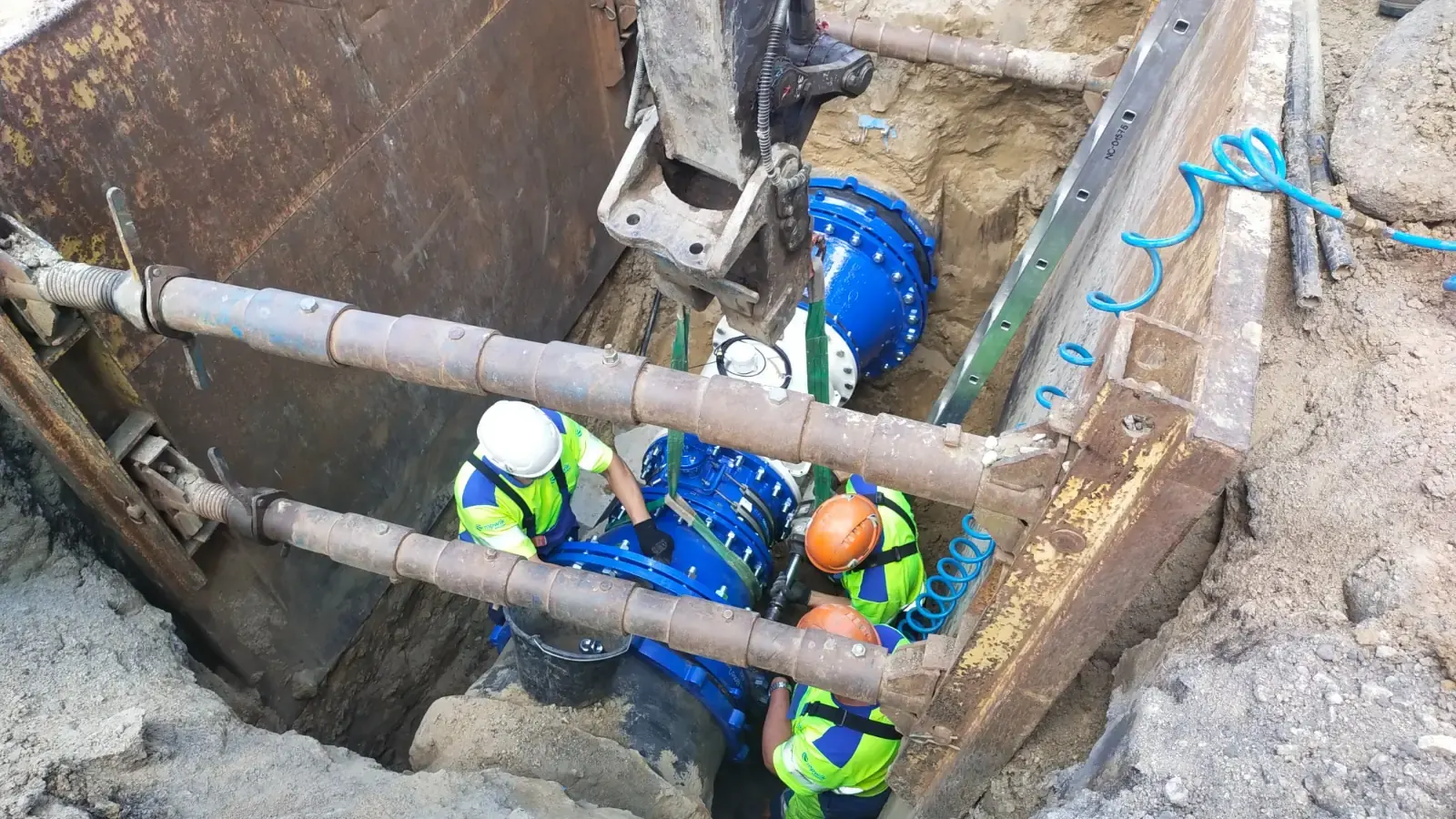
Because the pipe lies in the ground, the trench is tight, and the water does not stop running. The tool has to cope with that on site, not in a workshop.
Tak jest zwykle
Z HydraCut HPO
An angle grinder means walking round the pipe and room for the operator's arm
The saw wraps the pipe in a chain. Thirty-five centimetres of clearance is enough.
A hand cut drifts off line and ends as a spiral instead of a circle
The guide chain holds the blade in one plane, so the cut meets itself.
Water from the cut pipe floods the working point and kills the equipment
The hydraulic drive keeps running even when the saw is under water.
Sparks and fragments in a tight trench are a real risk to the operator
The adjustable blade guard covers the cutting zone all the way round.
Lifting the pipe out means an excavator, time and a dug-up lane
You cut the pipe where it lies. The trench stays as it was.
Methods compared
A torch works on metal only and leaves a heat-affected zone, and in a trench with gas or residual medium it is often ruled out. An angle grinder cuts anything, but you have to walk round the pipe and hold the plane by hand.
The circumferential saw solves both: it clamps onto the pipe, guides the blade along a chain and comes back exactly to the starting point. The operator does not hold the line, only the feed.
Oxygen torch
Angle grinder
HydraCut HPO
How it works
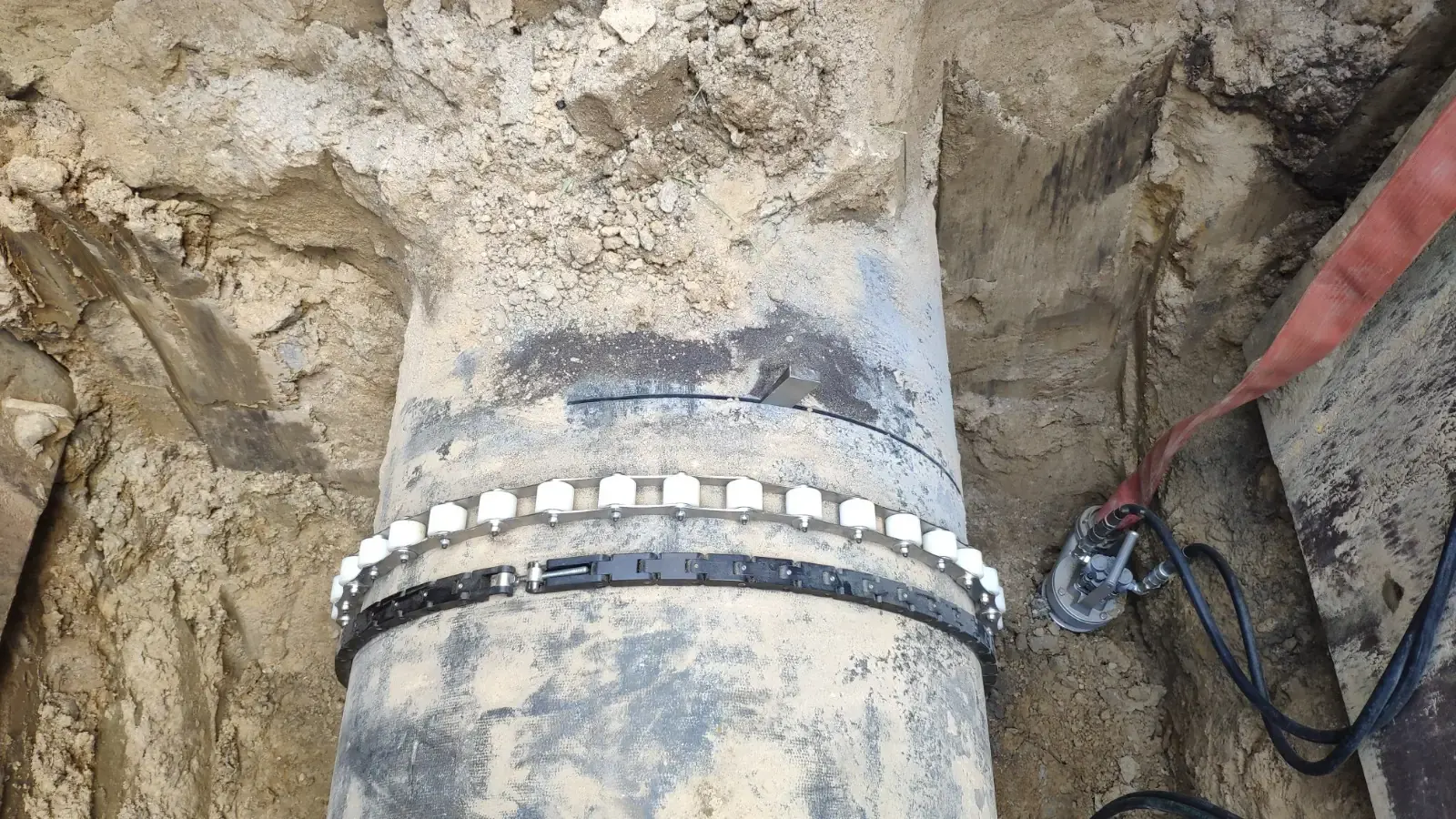
The fixed guide chain wraps the pipe 205 mm from the cut line and sets the plane. That chain, not the operator's arm, decides where the blade goes.
The saw sits on the guide chain and the roller chain locks it from underneath the pipe. It needs 35 cm of clearance, so it fits a tight trench.
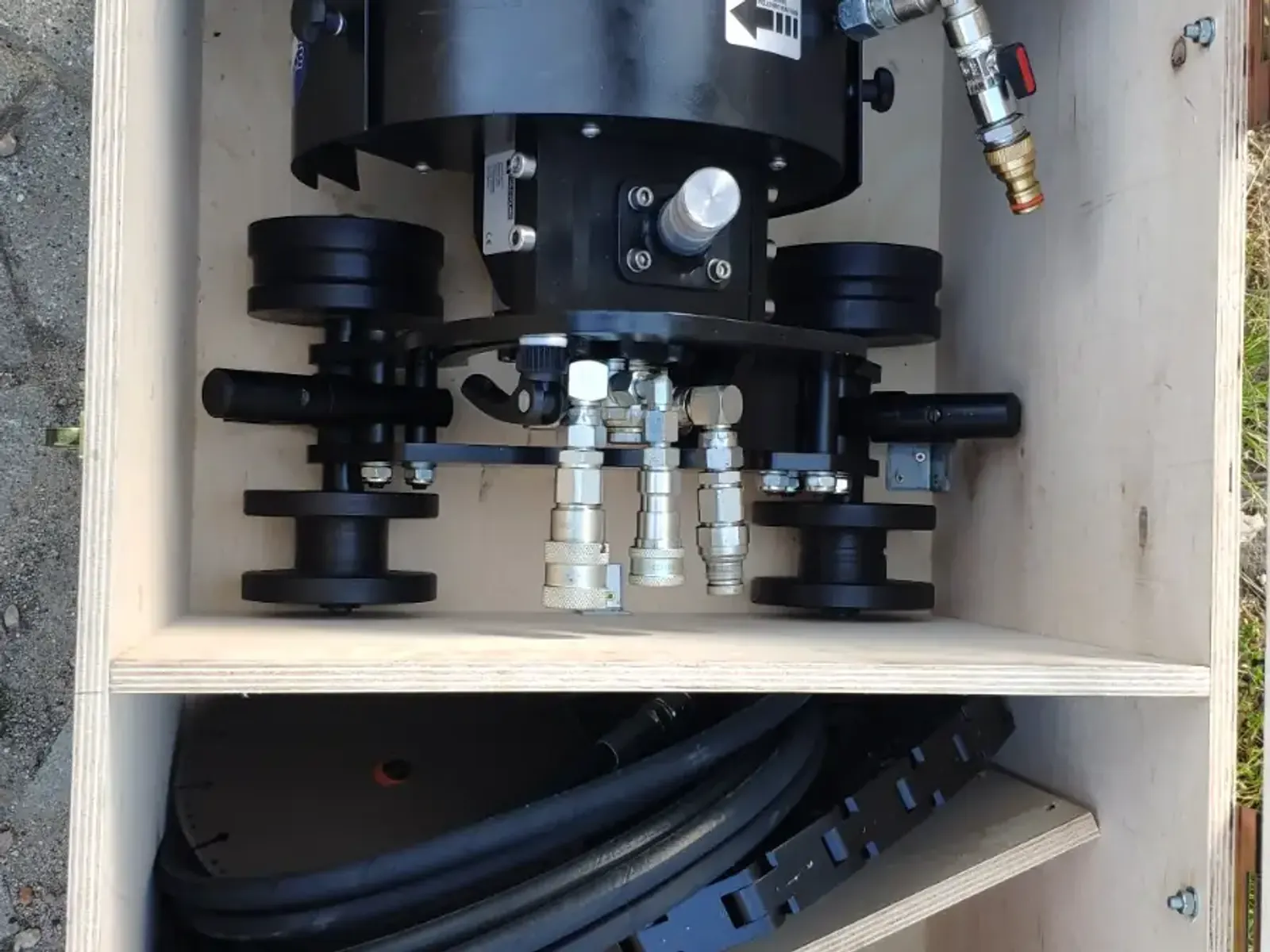
Supply from a power pack: flow 23 to 26 l/min at 140 to 160 bar. The saw needs a three-line source, because a separate line returns pump leakage.
The operator pulls the carriage by the guide tube, against the blade rotation, and switches to the other side of the pipe halfway round. The cut meets itself at the starting point, with no spiral.
Covered by both models
Because the power source is hydraulic, the saw can be used in wet conditions without damage.
People and machine
The saw goes down into the trench with a utilities crew, not with the manufacturer's service team. It weighs 13 or 14 kilograms, so it is carried down by hand. Cutting takes two people: one guides the saw, the other controls the oil flow at the power pack.
The saw was created as a safe alternative for cuts made difficult and dangerous by the position of the pipe.
Two models
The difference comes down to the diameter range. Blade, hydraulics, speed and guard are shared, so the choice depends only on what pipes you cut.
203–603 mm
Connections, distribution networks and medium diameter pipes.
600–1200 mm
Collectors, mains and large diameter pipes.
| Parametr | HPO600 | HPO1200 |
|---|---|---|
| Cutting range | 203–603 mm | 600–1200 mm |
| Blade diameter | 200 mm | 200 mm |
| Blade mounting | 22,2 mm | 22,2 / 25,4 mm |
| Weight | 13 kg | 14 kg |
| Oil flow | 20–26 l/min | 26 l/min |
| Working pressure | 138 bar | 138 bar |
| Blade speed | 2000 rpm | 2000 rpm |
| Sound pressure at the working point | 93,4 ±1,5 dBA | 93,4 ±1,5 dBA |
| Sound power of the machine | 98,5 ±2,3 dBA | 98,5 ±2,3 dBA |
The HPO600 stops at 603 mm, the HPO1200 starts at 600 mm. Outside that three-millimetre overlap the pipe diameter points to one model, so the choice is rarely in doubt.
Applications
Cutting out a damaged length without lifting the whole pipe from the trench.
Opening a live main for a new connection or fitting.
Cutting is possible even while water is still running from the pipe and flooding the working point.
Large diameter pipes, up to 1200 mm, in tight trenches and chambers.
Cutting pipes into lengths that can be lifted out and hauled away.
Cutting steel and cast iron without an open flame, so without a heat-affected zone.
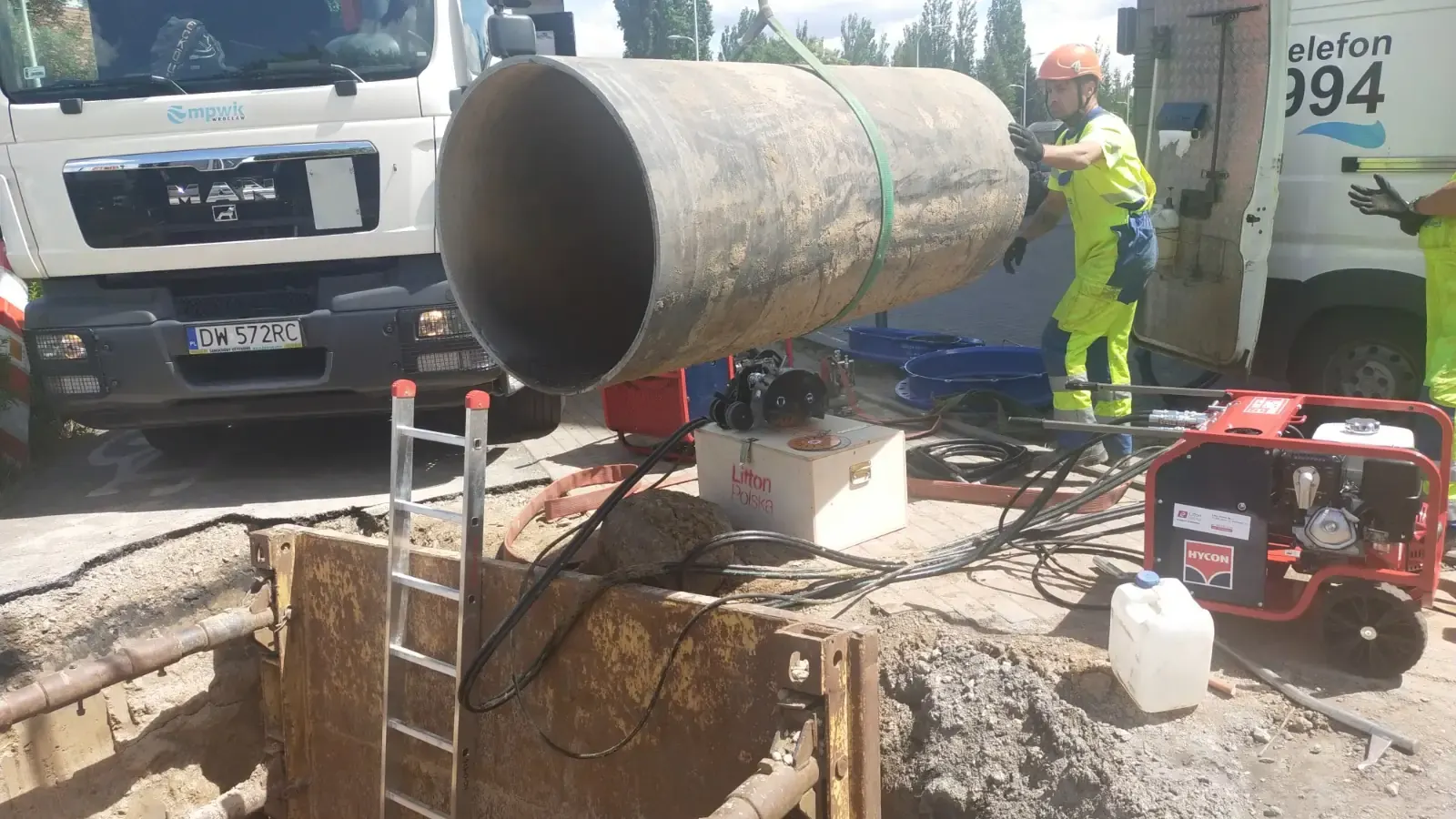
Equipment
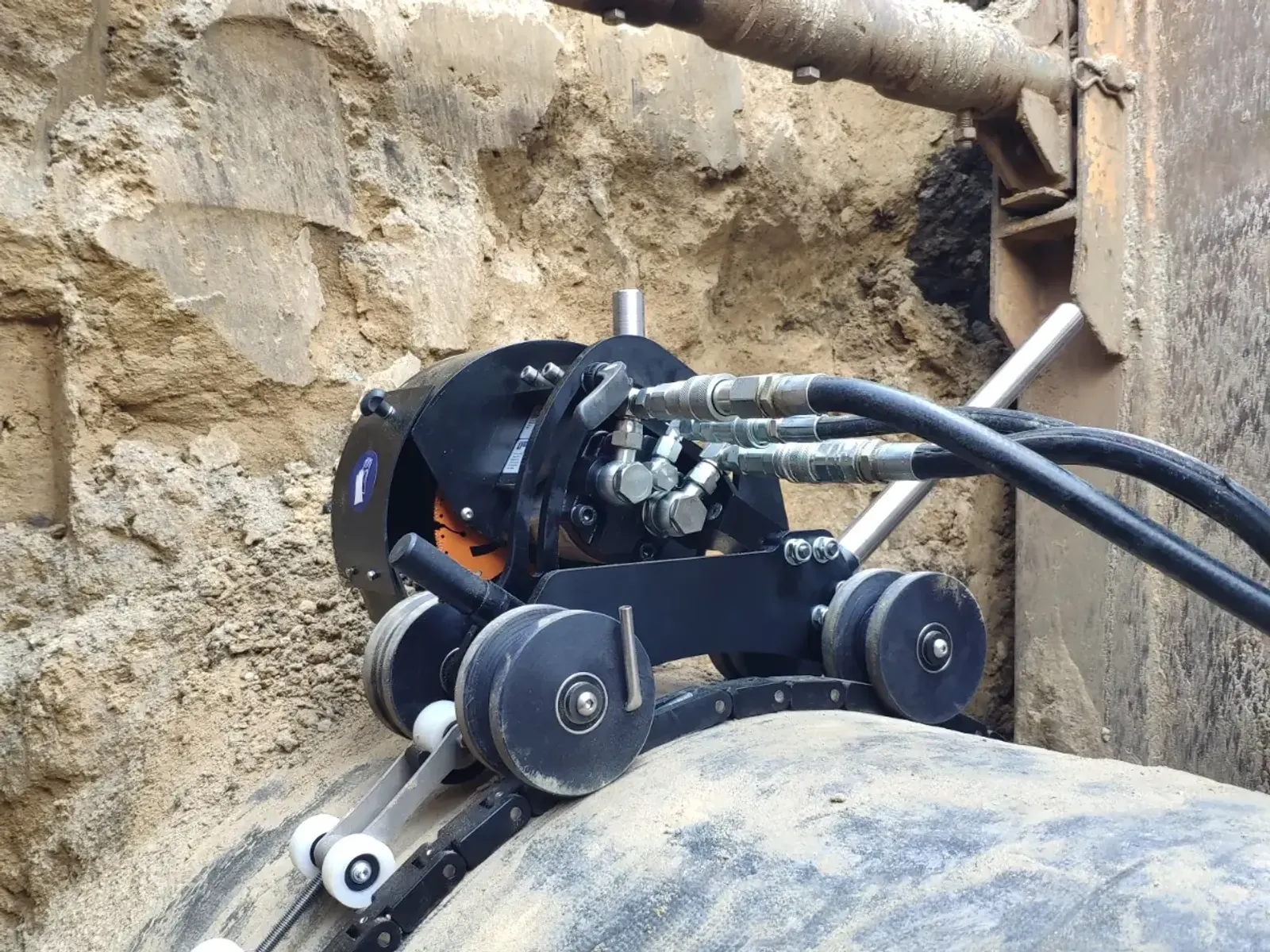
Specifications
Catalogue data for the machine in its standard configuration. Underlined entries await confirmation in the technical documentation.
Full specification| Cutting range, HPO600 | 203–603 mm |
|---|---|
| Cutting range, HPO1200 | 600–1200 mm |
| Weight | 13 kg / 14 kg |
| Blade diameter | 200 mm |
| Blade speed | 2000 rpm |
| Oil flow | 20–26 l/min |
| Working pressure | 138 bar |
| Clearance around the pipe | 35 cm |
Manufacturer
FIJALO-POLAND, a Polish manufacturer of machines for underground construction. The same company is behind the ALUSTEER slurry-free pipe jacking machine shown at TRAKO and ENERGETAB. Same service and the same phone number you call for blades and chains.
FAQ
Contact
Tell us what pipes you cut and in what conditions. We answer with the right model and a price.